CMD and Jaw Pain – Guidance and Treatment in Frankfurt
Jaw pain, teeth grinding, pain while chewing, or tension-related headaches – these symptoms are often caused by craniomandibular dysfunction. We provide assessment and physiotherapy treatment, focusing on the jaw, neck, and the entire tension system.
Headaches and neck tension
Pain when chewing or opening the mouth, or a clicking sound in the jaw joint – these are typical signs that the jaw joint is not functioning optimally. The symptoms often occur on one side, sometimes shifting sides, and frequently intensify after stress or prolonged periods of tension.
Pain, pressure, or a feeling of heaviness
Craniomandibular dysfunction (CMD) rarely remains confined to the jaw. Chains of tension extend from the temporomandibular joint, across the neck, and into the shoulder girdle – and can contribute to headaches, tinnitus, or dizziness.
Teeth grinding and nighttime tension
Bruxism – that is, teeth grinding or clenching – is often an unconscious reaction to stress or overload. The jaw bears the burden of what the rest of the body fails to let go of.
Briefly explained
What might lie behind CMD and jaw pain

You’ve come to the right place if...
Your jaw hurts, clicks, or locks
Headaches and neck tension keep recurring
You suffer from teeth grinding or nighttime tension
Why CMD symptoms develop and persist
CMD is rarely an isolated jaw problem. The causes often lie in the interplay between the jaw, neck, posture, and the way the body processes stress.

Overview of common triggers
Muscle tension in the jaw and neck area
Persistently tense masticatory muscles and tight neck muscles place strain on the temporomandibular joint and can cause pain, restricted movement, and clicking sounds.
Stress and psychological strain
The jaw and emotions are closely linked. Tension, overload, or unconscious protective reactions often manifest in the jaw first – as clenching, grinding, or tightness.
Posture and Spine
A forward head posture or tension in the cervical spine alters the load on the temporomandibular joint. The jaw and the cervical spine influence each other.
Tooth misalignments and bite problems
If the upper and lower jaws do not fit together harmoniously, the muscles compensate – resulting in pain over time. Close coordination with the dentist is advisable in this case.
Injuries and trauma
A fall, whiplash, or a procedure in the oral cavity can permanently disrupt the delicate balance in the jaw area – even long after the acute symptoms have subsided.
Sleep disturbances and exhaustion
Poor sleep increases pain sensitivity and muscle tone. TMD symptoms and sleep problems often exacerbate each other.
CMD Therapy & Manual Therapy
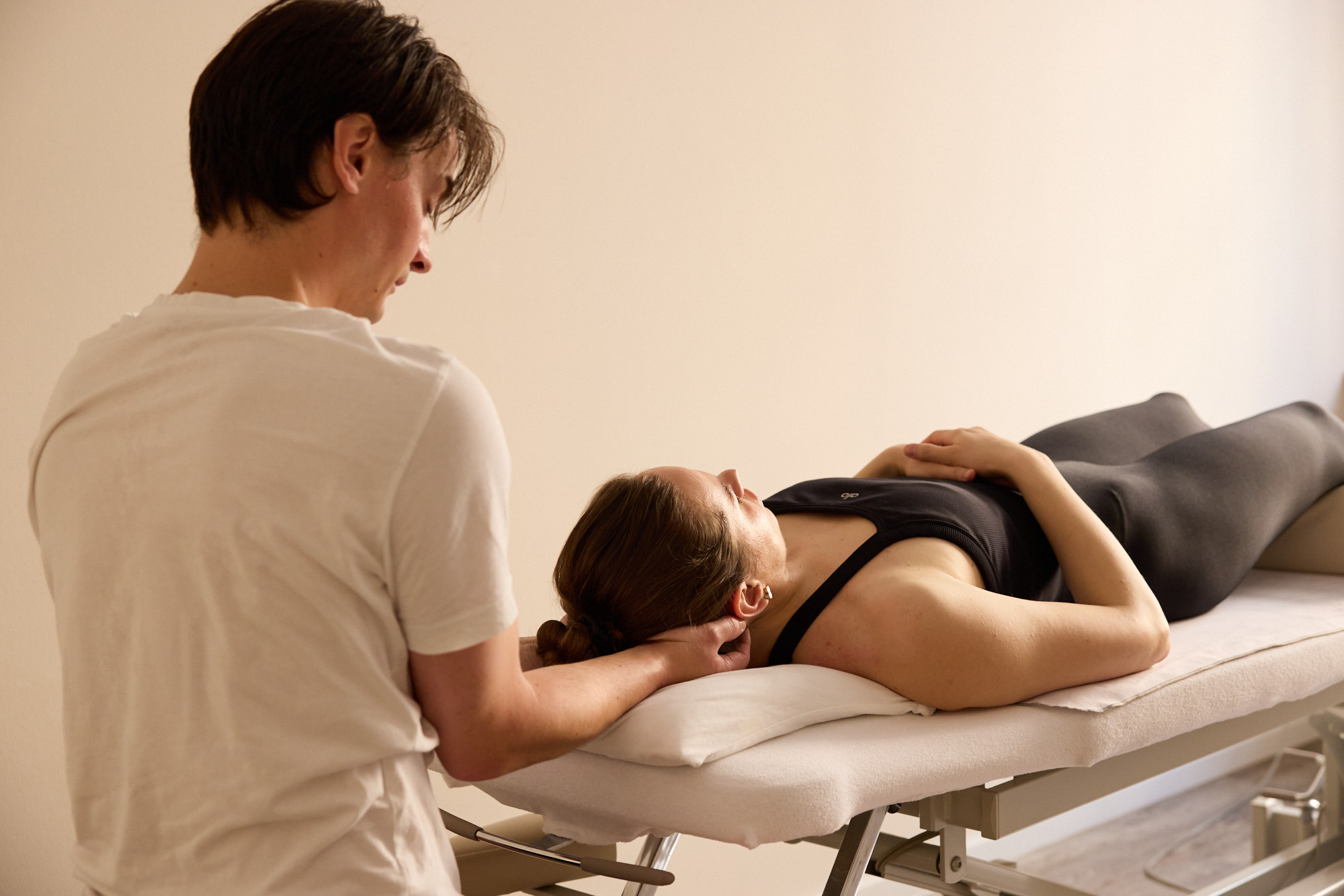
We view the temporomandibular joint, the muscles of mastication, and the cervical spine as a single unit. Manual techniques, myofascial treatment, and targeted mobilization reduce pain and improve mobility – without overexertion.
Myoreflex Therapy
For pronounced muscle tension and chronic pain patterns in the jaw and neck area, we use Myoreflex Therapy as a complementary approach – working gently and precisely on the muscle attachments.
Interdisciplinary coordination
CMD lies at the intersection of physiotherapy and dentistry. When necessary, we make targeted referrals to dentists or orthodontists – and collaborate in a coordinated manner as required.
How we treat CMD and jaw pain

Appropriate treatments for CMD and jaw pain




What you can do yourself
Pay conscious attention to jaw tension – many people clench their teeth without realizing it. Lips relaxed and teeth slightly apart is the jaw's relaxed resting position.
Stress and excessive strain have a direct impact on jaw muscle tension. Relaxation rituals, intentional breaks, and sleep quality play a more significant role than is often assumed.
We determine which specific exercises and self-care measures are appropriate based on the clinical findings.

Did you know?
Health insurance subsidy available
Depending on the course format, certified prevention courses under Section 20 of the Social Code Book V (SGB V) may be eligible for subsidies from statutory health insurance funds. You can find details on our prevention courses page.
FAQ – Frequently asked questions about CMD and jaw pain
Didn't find what you were looking for? We would be happy to assist you personally.
What is CMD?
CMD stands for craniomandibular dysfunction – a functional disorder of the temporomandibular joint and the muscles of mastication that can manifest as pain, clicking sounds, limited mouth opening, or radiating discomfort in the head and neck.
Can CMD be treated with physiotherapy?
Yes. Physiotherapy is an established treatment approach for CMD, involving manual techniques, myofascial treatment, and targeted exercise therapy. Depending on the specific situation, we work closely with the dentist or orthodontist.
What is the difference between a splint and physiotherapy for TMD?
A splint relieves the temporomandibular joint and can reduce symptoms – but it does not alter the muscle patterns and tension that perpetuate the condition. Physiotherapy addresses precisely these factors.
Are headaches and neck tension linked to CMD?
Often, yes. Chains of tension extending from the jaw through the neck and into the shoulder girdle are typical. A precise assessment reveals what is interconnected and what should be treated separately.
Do I need a prescription for CMD treatment?
Physiotherapy can be prescribed by a doctor. If you have private health insurance, wish to pay for treatment yourself, or hold supplementary insurance for naturopathic treatments in addition to your statutory health insurance, we will discuss the options that are right for you in a transparent manner.
How does billing work in your private practice?
We bill via private health insurance, state aid schemes (Beihilfe), or as a self-pay service. Physiotherapy is billed according to the GebüH fee schedule, and naturopathic services according to the GebüH HP schedule. Please feel free to contact us if you have any questions regarding billing.
Contact & Appointment
If you would like to request an appointment, you've come to the right place. Simply fill out the form – we will get back to you.
Monday to Friday:
8:00 a.m. to 6:00 p.m.
(Appointments by arrangement)
Phone +49 (0) 69 92038093
Email: info@praxis-laemmerhirt.de
