Scoliosis – understanding what happens in the body and taking targeted countermeasures
A lateral curvature of the spine alters posture, movement, and often one's sense of the body. We conduct individual assessments – for children, adolescents, and adults – and combine physiotherapy with targeted movement therapy.
Asymmetry that becomes visible
A tilted torso, uneven shoulders, or a rib hump when bending forward – scoliosis often first manifests visually. Many affected individuals initially notice it in the mirror or when trying on clothes.
Muscle tension and back pain
Uneven loading of the spine leads to muscular imbalances over time – some muscles constantly work too hard, while others do too little. The result is tension, fatigue, and pain, often more pronounced on one side than the other.
Uncertainty about the further course of events
Will it get worse? What can I do? Do I need a brace or surgery? These are the questions weighing on the minds of patients and parents. We help put things into perspective – and show the specific contributions that physiotherapy and movement therapy can make.
Briefly explained
What happens in the body with scoliosis – and what those affected experience

You’ve come to the right place if...
Scoliosis has been diagnosed in your child or in yourself
Back pain or tension associated with scoliosis
You want to do something active for your spine
How scoliosis develops – and what influences its progression
In most cases, the cause of scoliosis is unknown – this is referred to as idiopathic scoliosis. However, the course of the condition can be actively influenced.


Overview of key relationships
Idiopathic scoliosis
The most common form – occurring without an identifiable cause and often discovered during the growth phase. The extent of the curvature and the growth phase determine which measures are appropriate.
Growth as a crucial phase
Scoliosis can worsen during periods of growth – especially during growth spurts. Regular monitoring and targeted exercise are particularly important during this phase.
Muscular imbalances
The lateral curvature causes the muscles on both sides of the spine to be subjected to unequal loads. Without targeted countermeasures, these imbalances intensify.
Everyday posture
Prolonged sitting, repetitive strain, and a lack of movement variety can exacerbate the symptoms – not the scoliosis itself, but the associated complaints.
Secondary complaints
Headaches, rib discomfort, breathing restrictions, or hip problems can be associated with pronounced scoliosis - and require a holistic approach.
Adult scoliosis
Even after growth has ceased, targeted therapy can reduce pain, improve posture, and enhance quality of life. Scoliosis is not a fate one simply has to accept.
Physiotherapy & Scoliosis Therapy
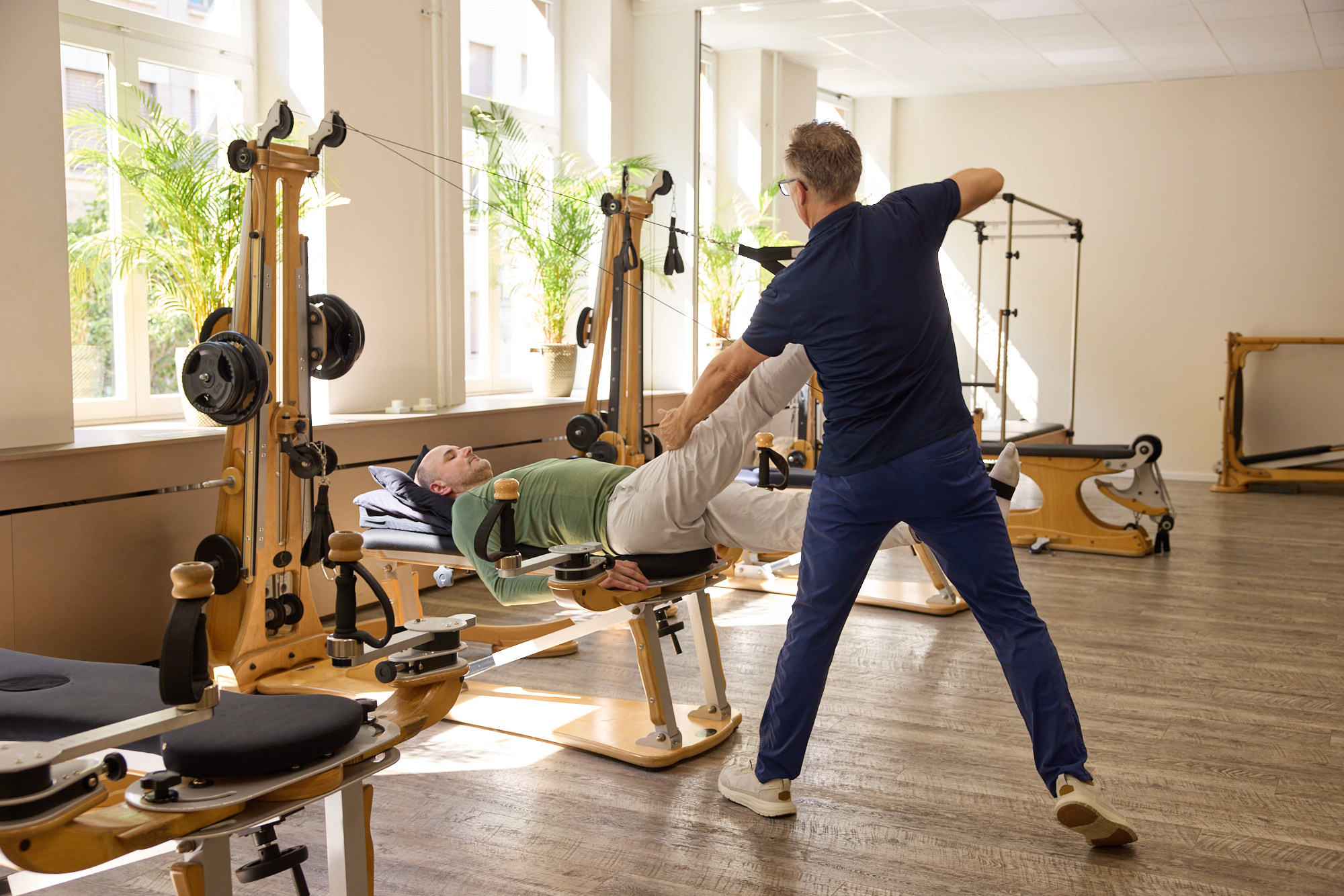
We assess the extent and progression of the curvature, muscular imbalances, and the effects on posture and movement. Targeted manual techniques, mobilization, and therapeutic exercises form the foundation.
GYROTONIC® Applications for Scoliosis
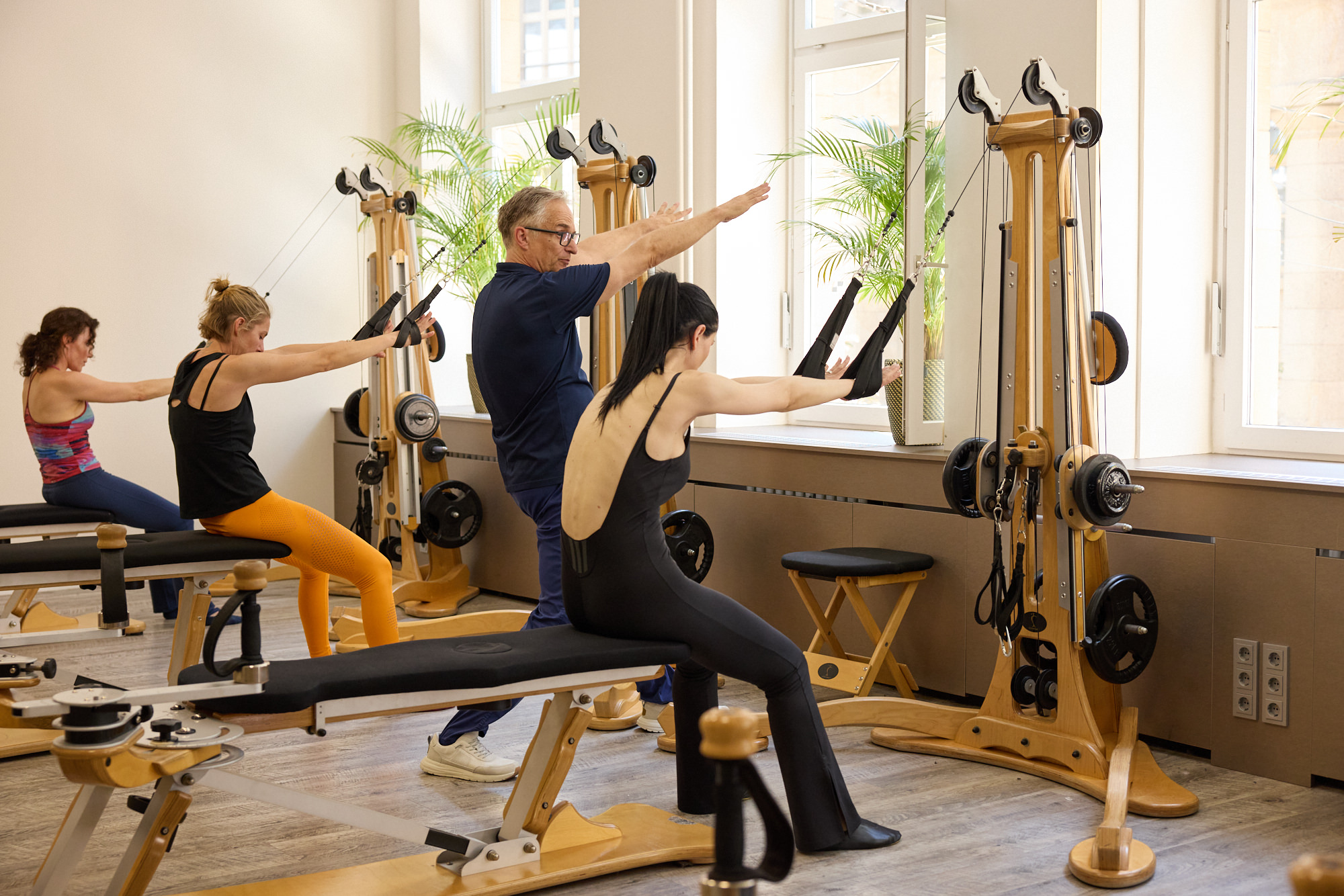
GYROTONIC® offers specific applications for scoliosis – featuring three-dimensional, decompressing movement sequences that lengthen the spine, address imbalances, and cultivate body awareness.
Active Conditioning & Movement Routines
Targeted exercises for home, posture training, and a workout routine that can be integrated into daily life in the long term – ensuring that progress is not limited to therapy sessions.
How we treat scoliosis

Appropriate services for scoliosis




What you can do yourself
For scoliosis, regular physical activity is more important than resting – though not all forms of exercise are equally beneficial. Sports that encourage a variety of movements and move the spine in different directions are generally better than activities that place repetitive, one-sided strain on the body.
Avoid sitting for long periods without a break – regularly changing your position noticeably relieves strain on the spine. We will tailor the exercises and everyday strategies to your specific situation based on our assessment.

Did you know?
Back and spine training with health insurance subsidy
To complement therapy, targeted back and spinal training can be utilized as a certified prevention course under Section 20 of the Social Code Book V (SGB V) – with potential subsidization by statutory health insurance funds.

FAQ – Frequently asked questions about scoliosis
Didn't find what you were looking for? We would be happy to assist you personally.
What is scoliosis?
A lateral curvature of the spine – often accompanied by rotation of the vertebral bodies. It can develop during the growth phase or in adulthood due to degenerative changes. In most cases, the cause is unknown.
Can physiotherapy cure scoliosis?
Physiotherapy cannot reverse the curvature itself, but it can alleviate symptoms, correct muscular imbalances, improve posture, and positively influence the progression of the condition. This applies to children, adolescents, and adults alike.
Does my child need a brace for scoliosis?
This depends on the degree of curvature and the growth phase. The attending orthopedist makes this decision; we complement the bracing treatment with physiotherapy and targeted exercise therapy.
Can scoliosis still be treated in adulthood?
Yes. Even after growth has been completed, targeted physiotherapy and exercise therapy can reduce pain, improve posture, and enhance quality of life.
Can physiotherapy be prescribed for scoliosis?
Physiotherapy can be prescribed by a doctor. If you have private health insurance, wish to pay for treatment yourself, or hold supplementary insurance for naturopathic treatments in addition to your statutory health insurance, we will discuss the options that are right for you in a transparent manner.
How does billing work in your private practice?
We bill via private health insurance, state aid schemes (Beihilfe), or as a self-pay service. Physiotherapy is billed according to the GebüH fee schedule, and naturopathic services according to the GebüH HP schedule. Please feel free to contact us if you have any questions regarding billing.
Contact & Appointment
If you would like to request an appointment, you've come to the right place. Simply fill out the form – we will get back to you.
Monday to Friday:
8:00 a.m. to 6:00 p.m.
(Appointments by arrangement)
Phone +49 (0) 69 92038093
Email: info@praxis-laemmerhirt.de
