Section 20 SGB V – the legal basis
Statutory health insurance funds are required to support primary prevention measures. Certified courses under Section 20 of the Social Code Book V (SGB V) are a recognized option – whether and to what extent your fund provides a subsidy depends on your specific plan and the fund itself.
ZPP – the quality check
The Central Prevention Testing Agency evaluates course content based on clear criteria: health-oriented physical activity, practical application in daily life, and a clear distinction from therapy. Only approved courses are eligible for subsidies.
What we provide
Upon completion of the course, you will receive a certificate of participation that you can submit to your health insurance provider. We would be happy to inform you about all the necessary documents.
Briefly explained
What are prevention courses under Section 20 of the Social Code Book V (SGB V)?

Unser Ansatz - So arbeiten wir in unseren Präventionskursen
Our classes follow a clear methodological approach: increasing mobility and stability while improving movement patterns – in a way that ensures the techniques remain effective outside the class setting. We incorporate principles from GYROKINESIS® and GYROTONIC® in a measured way, focusing on enhancing movement quality rather than simply following a trend.
Three-dimensional mobilization
Fluid movement sequences that mobilize the spine and joints in all directions – for lasting mobility rather than one-dimensional stretching.
Coordination of movement and breathing
Rhythm, control, and body awareness are trained through the conscious connection of breathing and movement – an approach that directly impacts posture and resilience in everyday life.
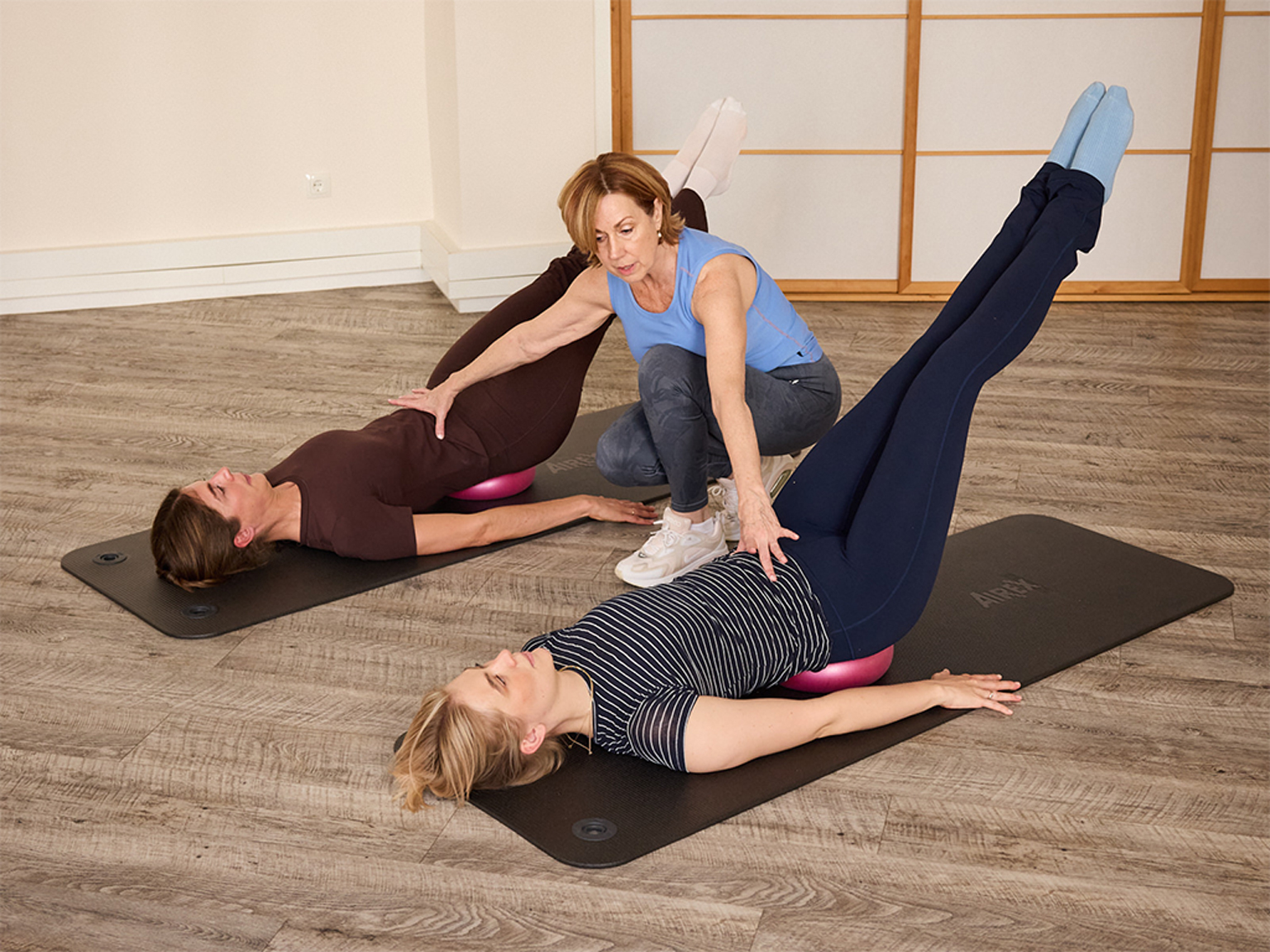
Functional strengthening
The core, leg alignment, and shoulder girdle are subjected to functional loads – in a joint-friendly manner, focusing on coordination and real-life everyday movements.
Myofascial Activation & Mobility
Dynamic, functional stretching and targeted fascial activation improve mobility and resilience. Small pieces of equipment can be used for support – though we always demonstrate variations that require no equipment.
Our course areas in the field of physical activity
Flexibility and Mobilization
Move your spine and joints in all directions – for greater suppleness in daily life and less stiffness after long periods of sitting or standing.
Back & Spine
Core strength, posture, and stable movement patterns – for a resilient back that performs well even under the demands of everyday life.
Preventive Core & Pelvic Floor Training
Awareness, coordination, and targeted strengthening – for a functional core that trains the pelvic floor, breathing, and torso as a single unit.
Functional full-body strengthening
Stability, coordination, and joint-friendly strength – using exercises that mirror real-life movements and can be performed without special equipment.
Coordination & Balance
Movement control and safe patterns – particularly beneficial for fall prevention and for anyone wishing to improve body control and reaction time.
For Companies
Prevention courses as a component of workplace health promotion – for teams wishing to actively embed health into their daily work routine.
How the subsidy works
In most cases, the process is straightforward. Whether and to what extent your health insurance provider covers the costs depends on the specific provider and plan – we will supply you with all the necessary documentation.
Step 1 | Select a course and register
You choose a suitable course format and register with us.
Step 2 | Participate regularly
Regular attendance is a prerequisite for receiving the subsidy; we will inform you of the exact minimum attendance requirement at the start of the course.
Step 3 | Receive certificate of participation
Upon completion of the course, we will issue you the official certificate of participation.
Step 4 | Submit to the health insurance provider
You submit the certificate to your health insurance provider. It is best to ask them directly about the exact reimbursement amount.

Prefer a personalized approach over a course?
Prevention Training – Your Personal Setup
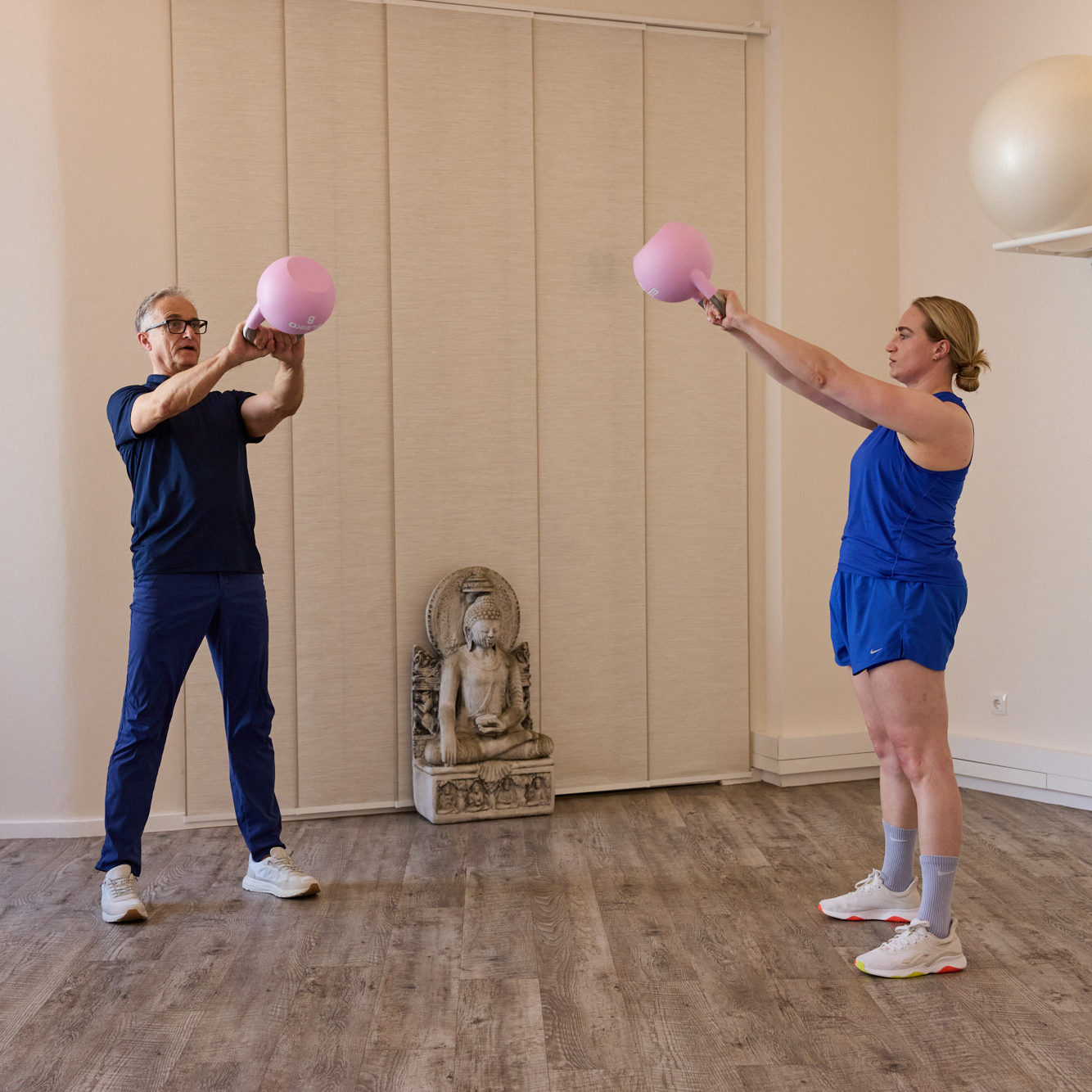
If you do not want fixed class times or prefer individually tailored training, preventive training is the better starting point – offering a program structure that is perfectly suited to you, rather than a standard class format.
FAQ – Frequently Asked Questions
Didn't find what you were looking for? We would be happy to assist you personally.
What is a prevention course under Section 20 of the Social Code Book V (SGB V)?
A certified primary prevention health course featuring content verified by the Central Prevention Testing Agency. The goal is to establish health-promoting routines and reduce risk factors such as physical inactivity.
What course areas do you offer?
Our courses fall within the scope of physical activity – covering areas such as flexibility & mobility, back & spine health, core & pelvic floor, functional strengthening, and coordination & balance, depending on the schedule. We can clarify which formats are currently running when you get in touch.
How does the subsidy process work?
Sign up for the course, attend regularly, receive a certificate of attendance, and submit it to your health insurance provider. Whether and how much is reimbursed depends on your insurance provider and your specific plan.
What are the prerequisites for participation?
As a rule, minimum attendance is required; we will inform you of the specific requirements at the start of the course. Upon completion, we will provide you with all the necessary documentation for submission.
Exactly how much does my health insurance fund reimburse?
This varies depending on your health insurance provider, plan, and personal circumstances. It is best to check the exact reimbursement amount directly with your health insurance provider – we will support you by providing course details and a certificate of participation.
Which course is right for me?
That depends on your goal – mobility, back health, core strength, or coordination. Briefly describe what you would like to achieve, and we will recommend the right starting point.
What should I bring to the first appointment?
Wear comfortable clothing and bring any relevant medical reports or test results, if available. Note: As some individuals are sensitive to scents, we ask that you refrain from wearing strong perfume. Please feel free to contact us if you are unsure.
Contact & Appointment
If you would like to request a training session, you’ve come to the right place. Simply fill out the form, and we’ll get back to you.
Monday to Friday:
8:00 a.m. to 6:00 p.m.
(Appointments by arrangement)
Phone +49 (0) 69 92038093
Email: info@praxis-laemmerhirt.de
