Muscles, fascia, and tension
Persistent tension and pain – whether after prolonged sitting or upon rising in the morning – are often caused by muscular imbalances or myofascial tension patterns that develop due to repetitive, one-sided strain in daily life.
Joints, intervertebral discs, and nerves
Shooting pain, numbness, or pain radiating into the leg may indicate issues with intervertebral discs or nerve structures. Determining whether a structure is affected – and if so, which one – requires a clinical assessment; symptoms alone are insufficient for a diagnosis.
Compensatory Patterns & Fear of Movement
People in pain move differently. These compensatory movement patterns often persist long after the original trigger is gone – thereby perpetuating the discomfort.
Briefly explained
What might be behind back pain

You’ve come to the right place if...
You experience recurring back pain
Movement feels unsteady or restricted
You wish to combine treatment and active strengthening.
Why back pain often recurs
Back pain sometimes disappears on its own – but frequently returns. This is rarely a matter of chance; rather, it stems from patterns that have become ingrained in daily life.


Overview of common triggers
Insufficient variety of movement
The back needs movement in all directions – twisting, bending, stretching, and moving sideways. Anyone who moves in the same patterns every day places strain on the same structures.
Imbalance between strength and mobility
When mobility is lacking, the body compensates with strength – and vice versa. This imbalance creates improper loading patterns that manifest as pain over time.
Sample patterns that are here to stay
Following an acute pain event, the body adjusts its movement patterns – even after the trigger is long gone. This protective muscle tension perpetuates the discomfort.
Strain without sufficient recovery
Whether in sports or at work – when the balance between exertion and recovery is off, the back is the first to react.
Stress and physical tension
Psychological stress increases muscle tone and pain sensitivity. This connection almost always plays a role in chronic back pain.
Lack of body awareness
People who have little awareness of their bodies often do not notice improper loading until it manifests as pain. Targeted work on body awareness is often the first step toward change.
Physiotherapy
We begin with a precise assessment of joints, muscles, fascia, and movement patterns. Depending on the findings, we employ manual therapy, mobilization, myofascial techniques, or targeted activation.
Training & Prevention
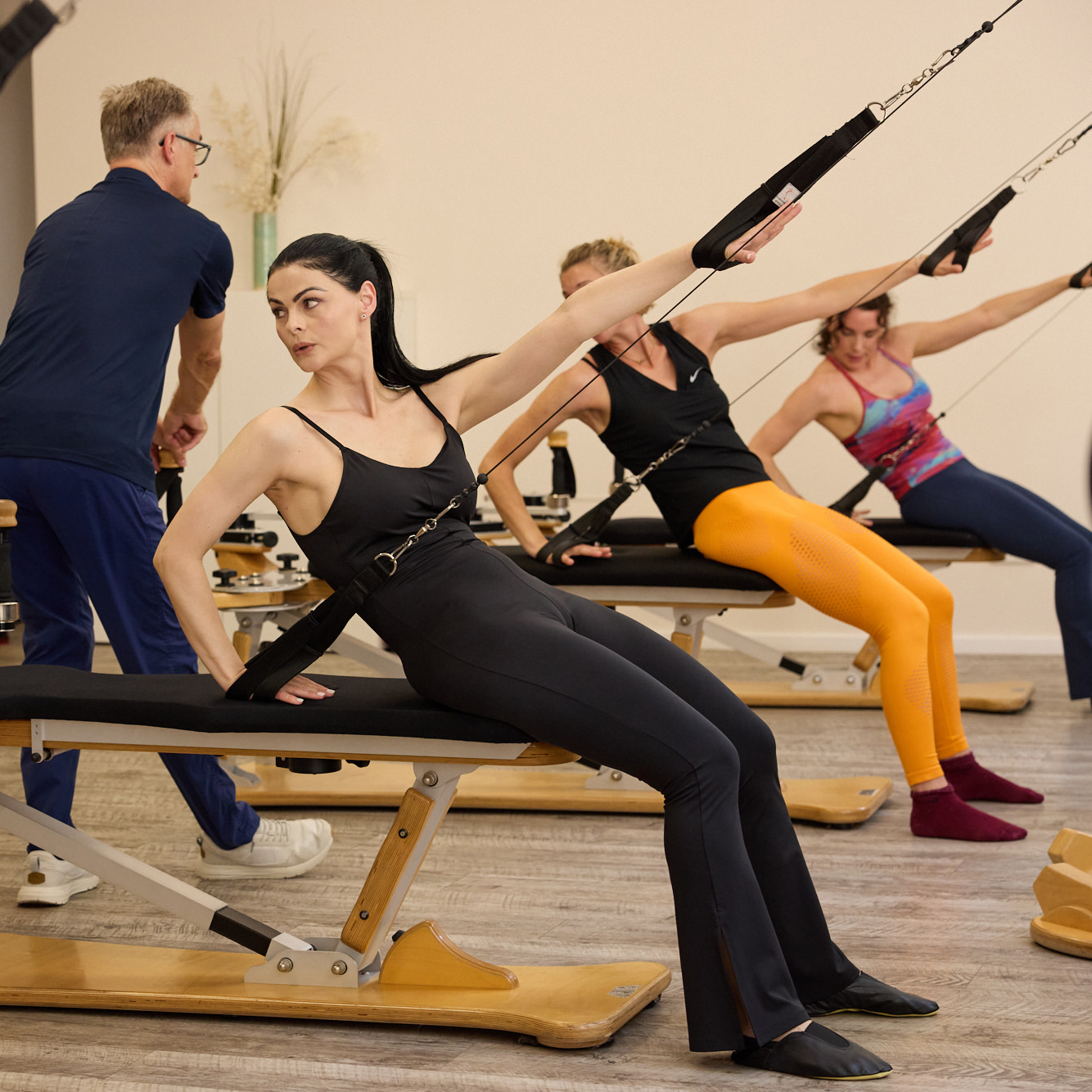
Once the acute phase has been overcome, we transition to active rehabilitation. Back exercises, spinal gymnastics, and functional training reinforce the results initiated by the treatment.
GYROTONIC® or GYROKINESIS®
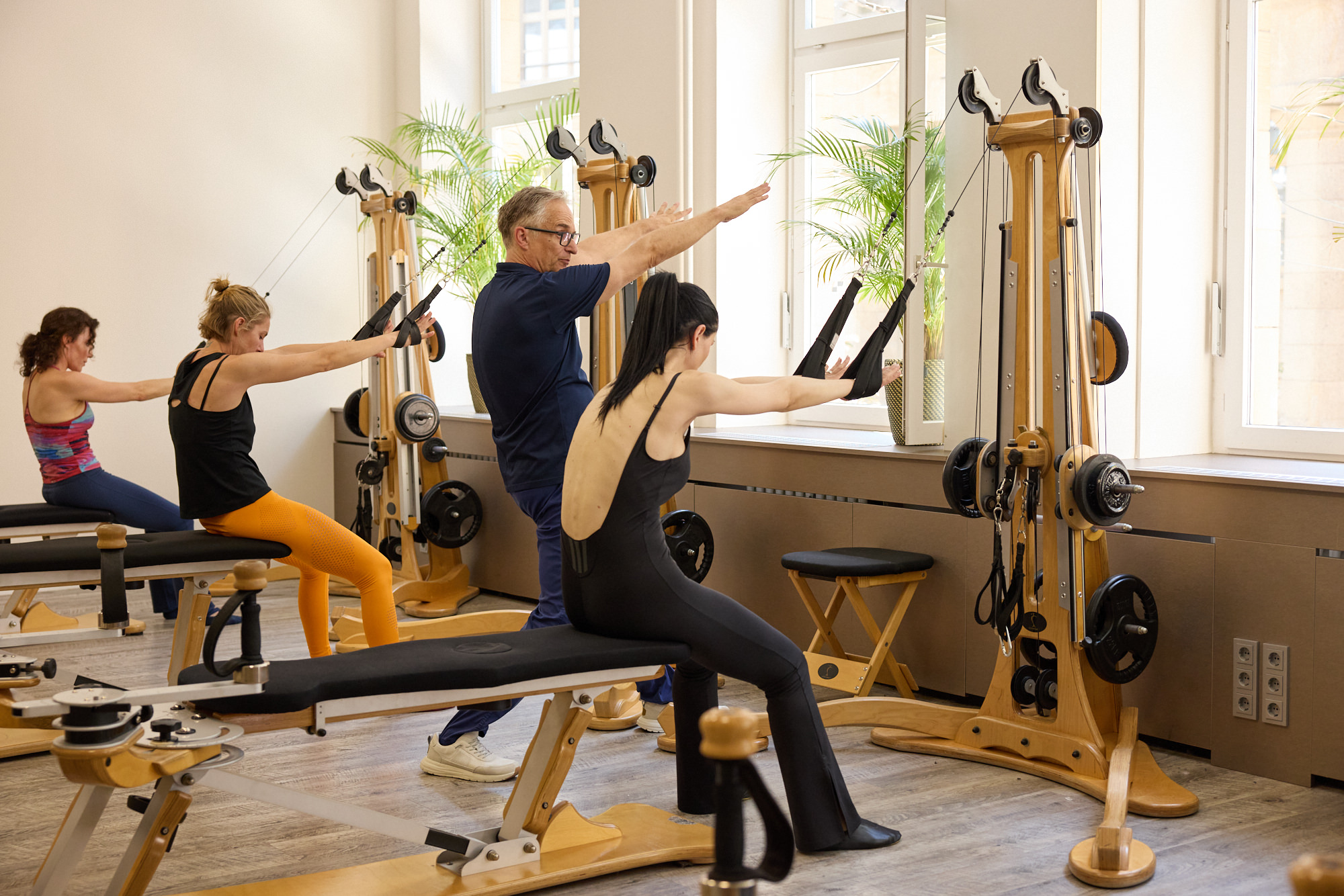
Three-dimensional, decompressive movement sequences for the spine – as a supplement to physiotherapy or as a standalone movement approach for long-term resilience.
How we treat back pain

Suitable services for back pain



What you can do yourself
Complete rest is rarely the right answer for back pain – but neither is carrying on without restraint. A few basic principles help in most cases:
Regular physical activity is better than rest – even if it is uncomfortable at first. Increase the level of exertion gradually rather than going from zero to full intensity. Pay attention to warning signs: numbness, tingling, or loss of strength in the legs are reasons to consult a doctor.
Which specific exercises are appropriate depends on your initial situation. We tailor this individually following the initial assessment.

Did you know?
Back training with health insurance subsidy
If you wish to actively strengthen your back, certified prevention courses under Section 20 of the Social Code Book V (SGB V) may be subsidized by statutory health insurance providers. Our back training is available as a course; you can find details on the prevention courses page.
FAQ – Frequently asked questions about back pain
Didn't find what you were looking for? We would be happy to assist you personally.
What could be behind back pain?
Muscles, fascia, joints, intervertebral discs, or a combination thereof. Movement patterns, daily physical stress, and protective muscle tension often play a role as well. A precise classification is determined during the assessment.
When is physiotherapy useful for back pain?
In most cases, physiotherapy is a sensible first step – whether the condition is acute or chronic. However, if you experience numbness, loss of strength, or pain following an accident, we recommend a medical assessment first.
What is the difference between physiotherapy and back training?
Physiotherapy focuses on the treatment phase – assessment, manual techniques, and targeted activation. Back training represents the subsequent active conditioning: strength, stability, and mobility. Combining the two yields more sustainable results than either approach alone.
What can I do myself for back pain?
Moderate physical activity is almost always better than resting. The right level of exertion depends on your starting point – we will clarify this during the initial appointment.
Do I need a prescription for physiotherapy?
Physiotherapy can be prescribed by a doctor. If you have private health insurance, wish to pay for treatment yourself, or hold supplementary insurance for naturopathic treatments in addition to your statutory health insurance, we will discuss the options that are right for you in a transparent manner.
How does billing work in your private practice?
We bill via private health insurance, state aid schemes (Beihilfe), or as a self-pay service. Physiotherapy is billed according to the GebüH fee schedule, and naturopathic services according to the GebüH HP schedule. Please feel free to contact us if you have any questions regarding billing.
Contact & Appointment
If you would like to request an appointment, you've come to the right place. Simply fill out the form – we will get back to you.
Monday to Friday:
8:00 a.m. to 6:00 p.m.
(Appointments by arrangement)
Phone +49 (0) 69 92038093
Email: info@praxis-laemmerhirt.de
