CMD Therapy in Frankfurt – The Connection Between Jaw, Neck, and Tension
CMD therapy is helpful when the jaw is under constant tension; the effects often extend beyond just the mouth, as the neck, head, and shoulders can also be affected—especially when stress, teeth grinding, or unfavorable loading patterns come into play.
The Method
CMD stands for craniomandibular dysfunction – a collective term for functional disorders involving the interaction between the teeth, jaw joints, and masticatory muscles. A characteristic feature is that the jaw does not react in isolation: the muscles of mastication, the neck, posture, and stress patterns can all influence one another.
How we work
In physiotherapy, we assess mobility, tension, and coordination within the jaw-and-neck system and employ targeted manual and physiotherapeutic techniques – supplementing these with exercises so you can continue making meaningful progress between appointments.
Typical goals
The goal is to reduce tension in the jaw and neck areas, improve mobility and coordination, support the interplay between the jaw, muscles, and posture, and establish practical self-management routines for everyday life.
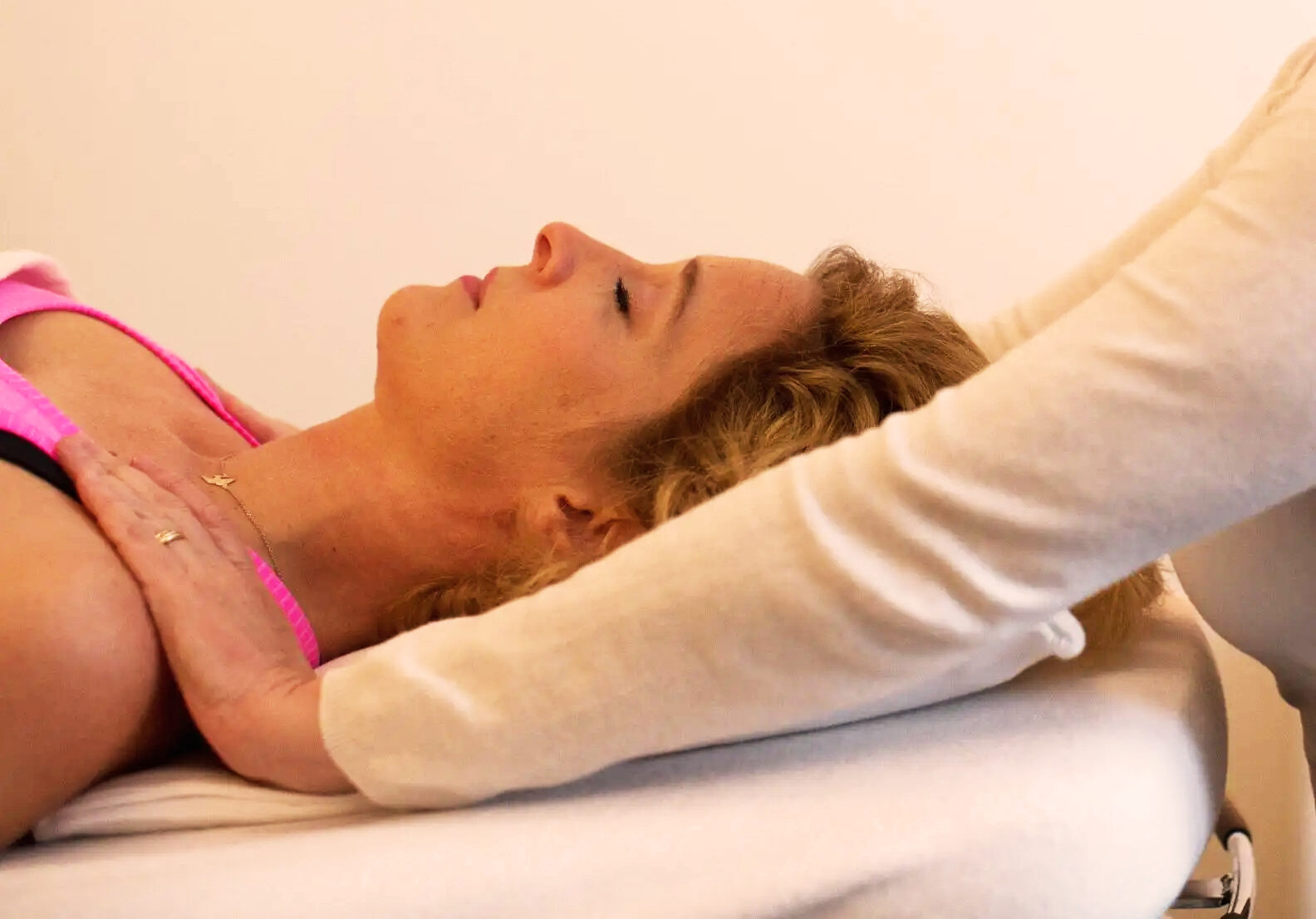
You’ve come to the right place if...
Jaw & Regulation
Understanding connections
Exercises for everyday life
Areas where we use CMD therapy
At the Lämmerhirt practice, we provide physiotherapy using a clear approach and practical, everyday strategies, with the goal of improving mobility and function.
CMD can be complex – which is why we take a close look: What exactly is troubling you, which situations aggravate the condition, and what can be meaningfully changed?
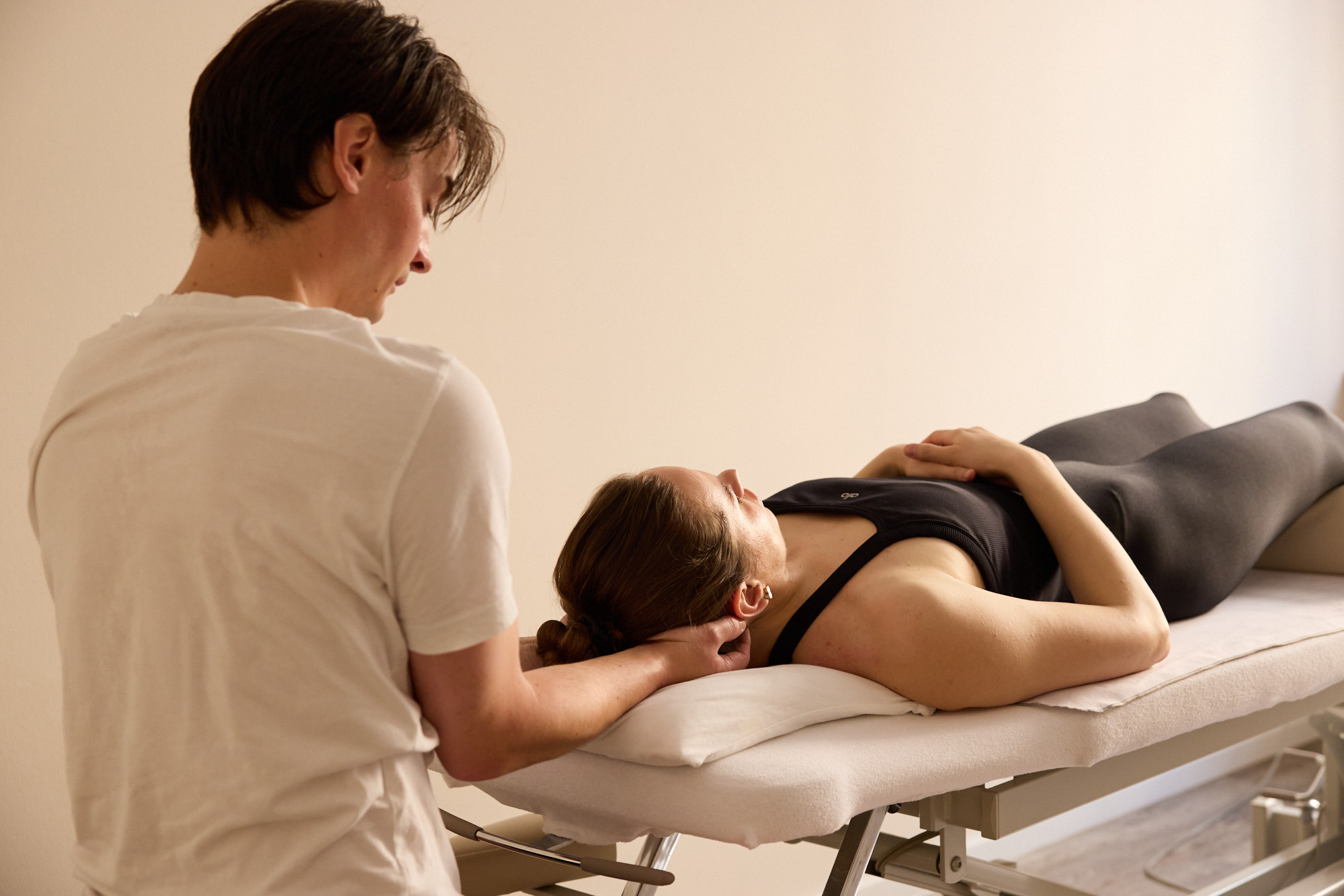

Common topics we help with
Relief & Regulation
Targeted work on the masticatory muscles and adjacent structures – to reduce tension and muscular strain patterns.
Function and mobility
Targeted support for jaw movements – opening, closing, and coordination – for greater ease of use.
Neck & Posture
The temporomandibular joint, neck, and shoulder girdle work together – we incorporate this interplay into our assessment and treatment.
Self-management
Exercises, routines, and practical tips for daily life, work, and moments of stress – so you can continue working productively between appointments.
Supplement to the rail
If an occlusal splint is already in place or being planned, physiotherapy can usefully complement the overall treatment approach – though the decision regarding dental care remains with the dentist.
Stress & Tension Patterns
Chronic stress often manifests in the jaw – we help identify patterns and influence them in a targeted way.
Supplementary components
Suitable components that we can add depending on the goal:

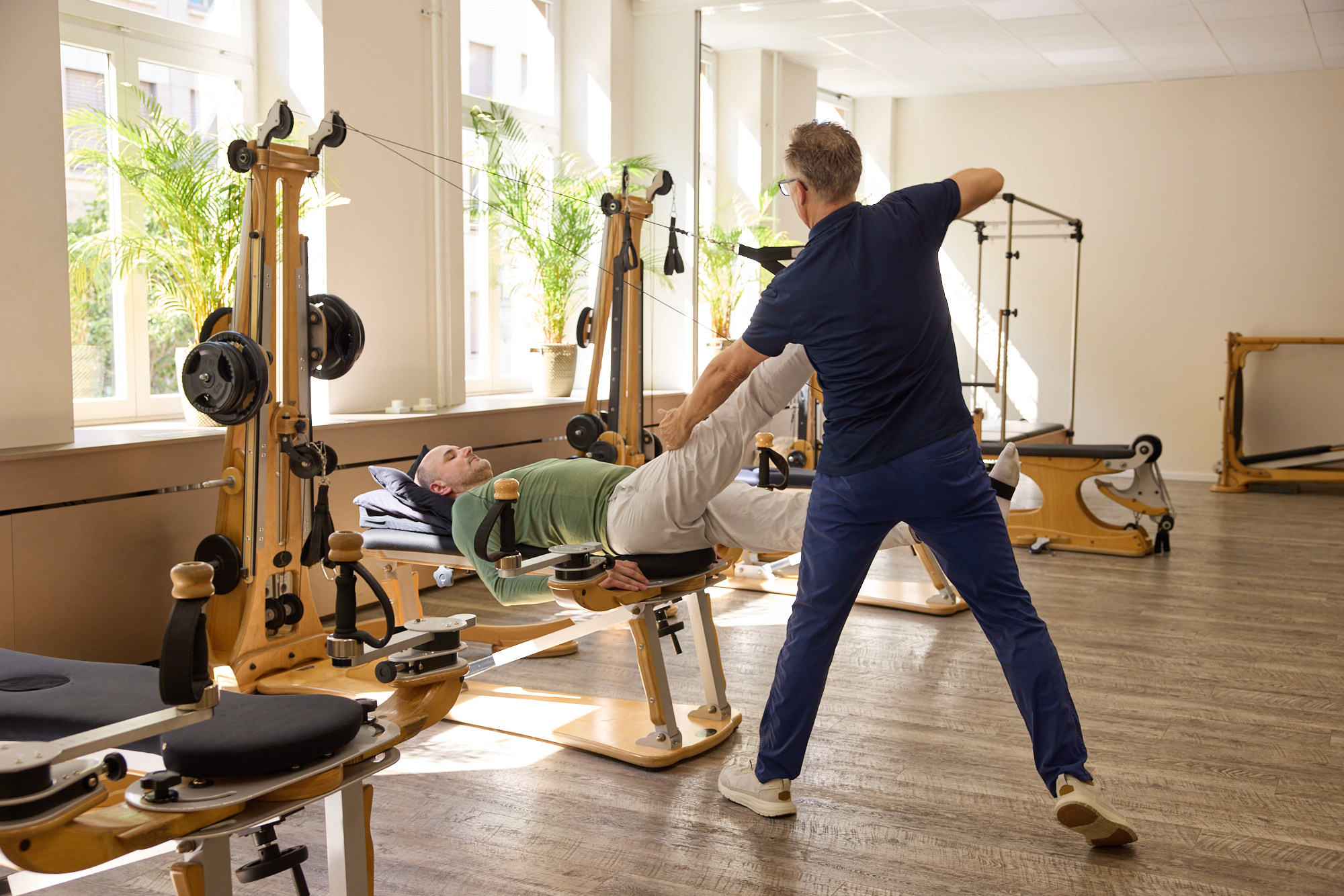


Your treatment process
To ensure that getting started isn't left to chance, we begin with a clear picture: What is your objective, how does it manifest in everyday life – and which components are realistic and sensible?
Step 1 | Medical History & Analysis
We record exactly what you feel and when it intensifies – as well as how your jaw, neck, and posture interact.
Step 2 | Targeted treatment
We work on relevant structures to influence tension and facilitate movement – guided by the clinical findings.
Step 3 | Activation & Coordination
Active elements help to consolidate new patterns and improve their implementation in everyday life.
Step 4 | Exercises and Routines
You will receive clear, simple exercises and tips that fit into your daily routine – enabling you to continue working actively between appointments.

Did you know?
Focus on common complaints
Sometimes the first question isn't about the method – but rather what makes sense for your specific needs.
In the "Common Complaints" section, you will find guidance on frequently occurring conditions – featuring clear information, sensible next steps, and appropriate therapeutic components.
FAQ – Frequently Asked Questions
Didn't find what you were looking for? We would be happy to assist you personally.
What is CMD – briefly explained?
CMD is a collective term for functional disorders involving the interaction of the teeth, jaw joints, and masticatory muscles – often affecting the neck and posture.
What symptoms can occur with CMD?
Patients frequently report jaw tension, clicking, limited mobility, or associated muscle tightness. What is crucial for treatment is what specifically limits you in your daily life.
How does physiotherapy help with CMD?
Through analysis, targeted techniques, and active exercises that regulate tension patterns and support function in the jaw-neck system.
Do I need a splint for CMD?
A dentist determines whether a splint is appropriate. If one is used, physiotherapy can effectively complement the overall treatment plan.
How long does the treatment take?
That depends on the goal, the prescription, and the course of treatment. We will discuss the plan openly and look at what is realistic together.
Are there exercises for home?
Yes. You will receive simple exercises and routines that fit into your daily life – not long programs, but targeted prompts.
Do I need a prescription?
Physiotherapy can be prescribed by a doctor. If you have private health insurance, are a self-paying patient, or hold supplementary insurance, we will openly discuss which options are suitable.
What should I bring to the first appointment?
If available: referral/prescription, relevant test results, and comfortable clothing. Note: As some people are sensitive to scents, we ask that you refrain from wearing strong perfume. Please feel free to contact us if you are unsure.
Contact & Appointment
If you would like to request an appointment, you've come to the right place. Simply fill out the form – we will get back to you.
Monday to Friday:
8:00 a.m. to 6:00 p.m.
(Appointments by arrangement)
Phone +49 (0) 69 92038093
Email: info@praxis-laemmerhirt.de
