Herniated disc – what helps now and what happens next
A herniated disc changes the way you move – and often your confidence in your own body, too. We help you make sense of the situation, combining physiotherapy with active strengthening, and support you every step of the way, from the acute phase to regaining the ability to handle the demands of daily life.
Pain that is different from usual
Shooting pains in the back that feel different from ordinary muscle tension – sharp, deep, and sometimes linked to breathing. Many sufferers know immediately: this is something else.
Radiation into the leg or arm
If pain radiates into the leg, tingling or numbness occurs, or weakness sets in, the intervertebral disc is pressing on nerve structures. These symptoms require precise assessment.
Fear of movement and protective posture
After a herniated disc, movement patterns change. Many people take it easy – often more than necessary. Targeted movement at the right time is a crucial part of recovery.
Briefly explained
What happens during a herniated disc – and what you feel
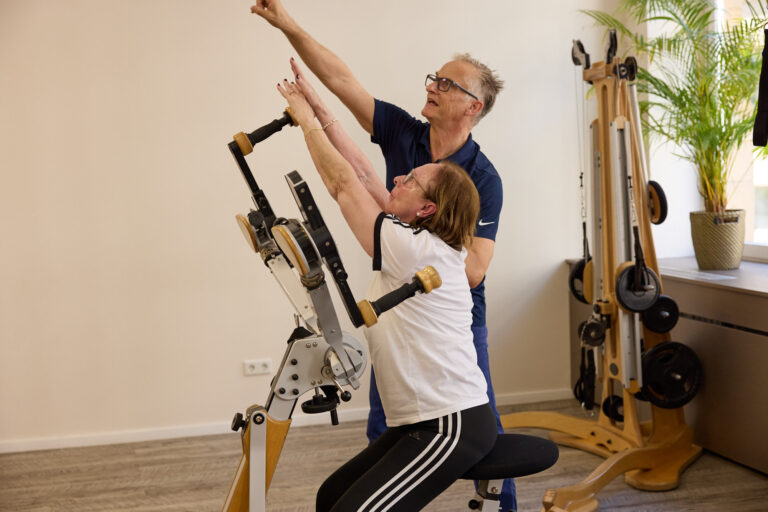
You’ve come to the right place if...
You have a herniated disc and don't know what to do next
Pain or tingling occurs in the leg or arm
Regain your ability to handle physical strain after the acute phase
Why a herniated disc develops – and why it persists
A herniated disc rarely occurs suddenly. It is usually the result of a prolonged process – and compensatory movement patterns often perpetuate the symptoms longer than the herniation itself.
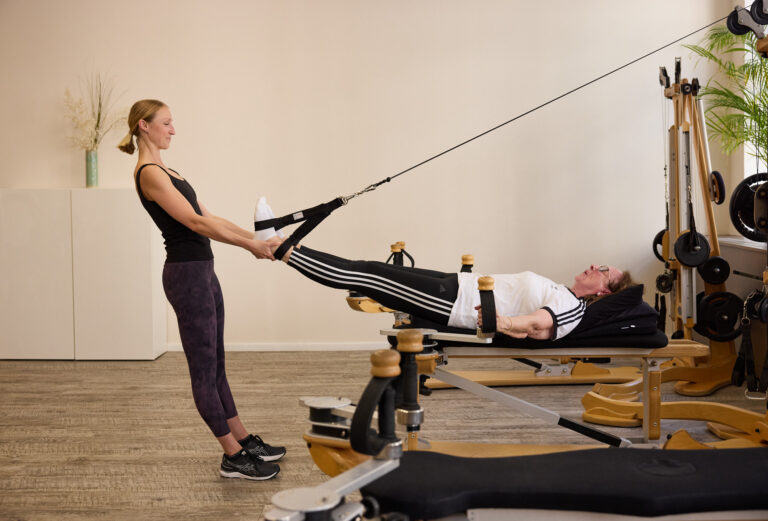
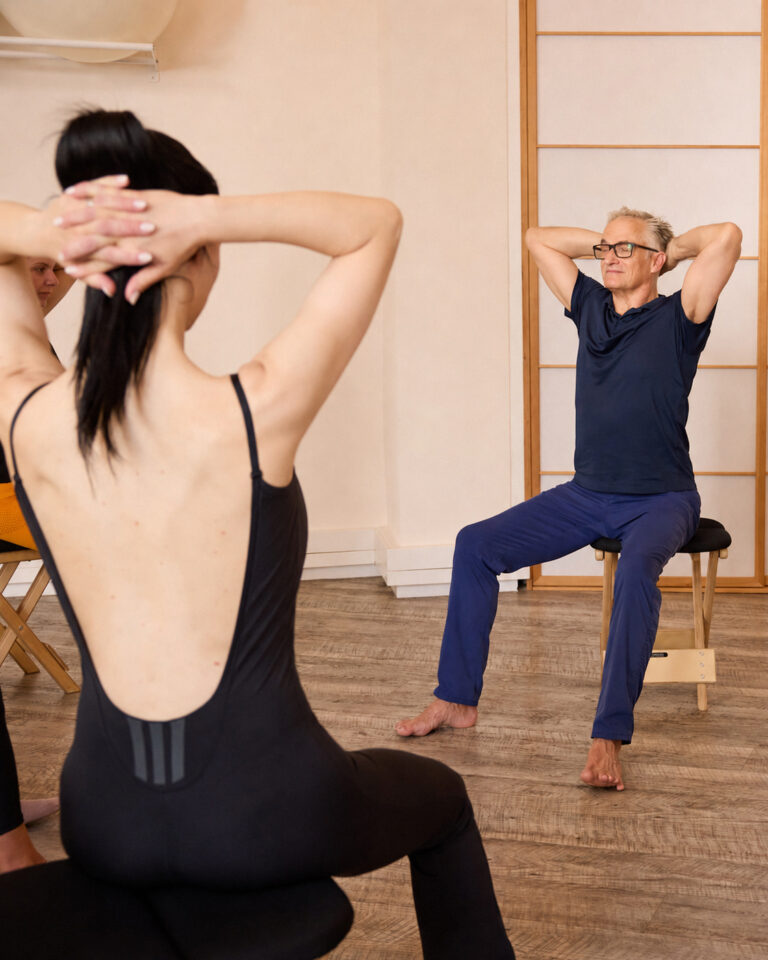
Overview of common triggers
Sustained compressive load on the spine
Prolonged sitting, heavy lifting, or one-sided strain place constant, increased pressure on the intervertebral discs – until the structure gives way.
Lack of movement variety
Anyone who moves within the same patterns day after day places strain on the same spinal segments. A lack of rotation, extension, and lateral movement makes the spine more vulnerable.
Weak core muscles
If the deep trunk and back muscles do not provide sufficient stabilization, passive structures such as intervertebral discs and ligaments take on more of the workload than they should.
Compensatory postures following the incident
Following a painful event, the body adapts its movement strategies – often excessively. These protective tensions frequently persist even after the acute stimulus has long since subsided.
Degenerative changes
As we age, spinal discs lose water content and elasticity. This makes them more vulnerable – but it is not an inevitable fate. Targeted strengthening can positively influence the process.
Stress and increased muscle tone
Psychological stress increases pain sensitivity and muscle tone – both of which worsen the situation in the case of a herniated disc and can slow down healing.
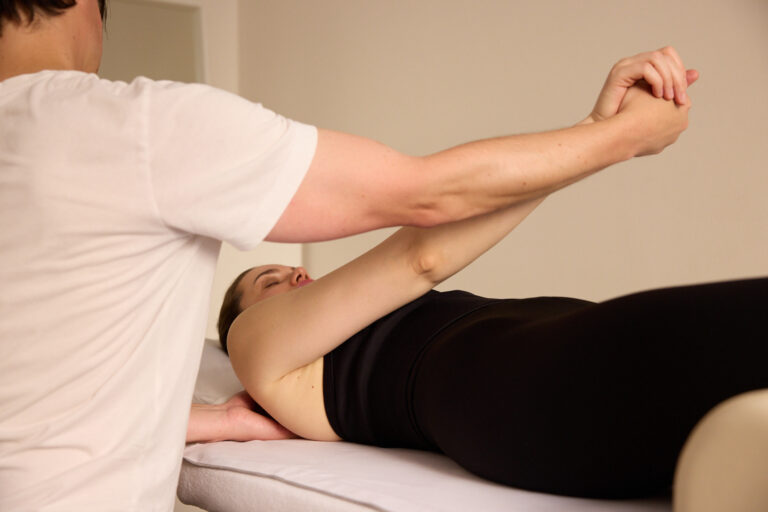
Physiotherapy – starting passively
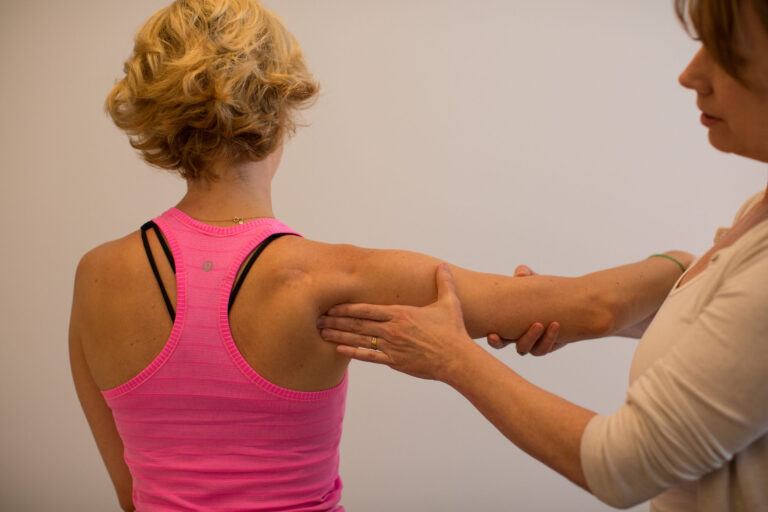
In the acute phase, we rely on manual therapy, targeted mobilization, and positioning – to relieve pressure and create the conditions for movement.
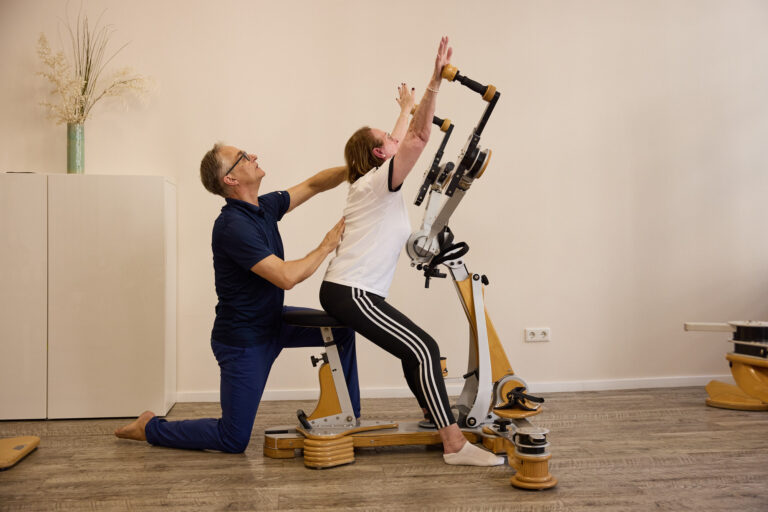
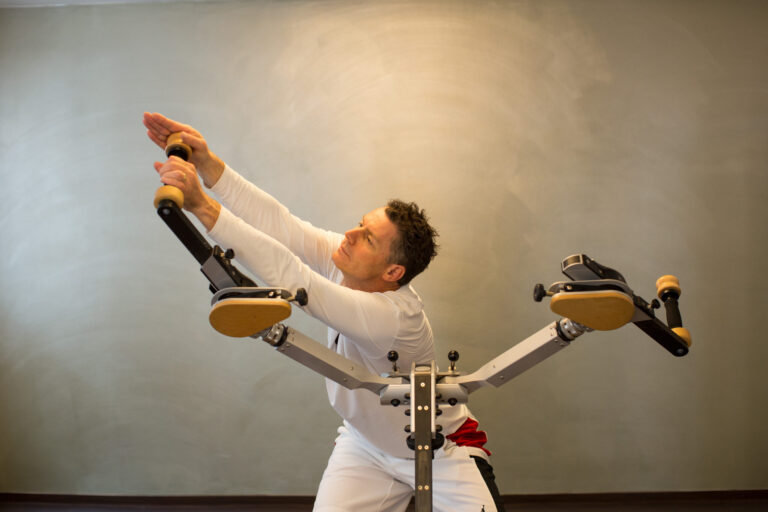
GYROTONIC® or GYROKINESIS® – Decompression in motion
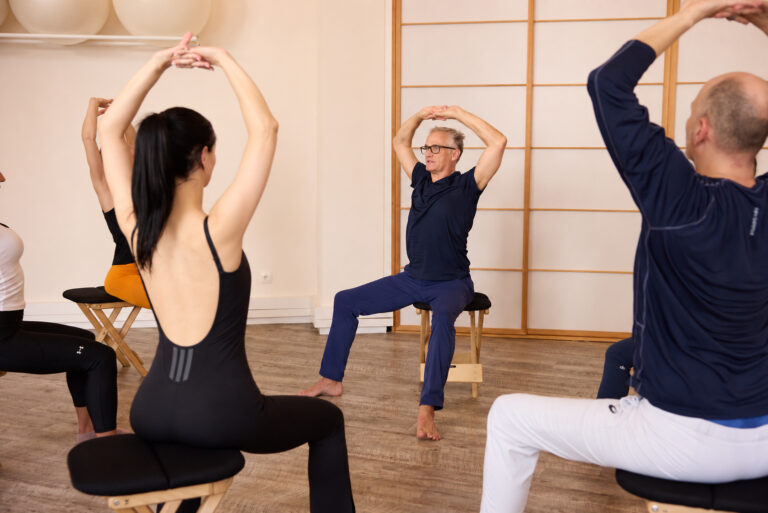
As soon as the situation allows, we transition to three-dimensional, decompressive movement sequences. The spine learns to relieve its own load during movement – not statically, but dynamically.
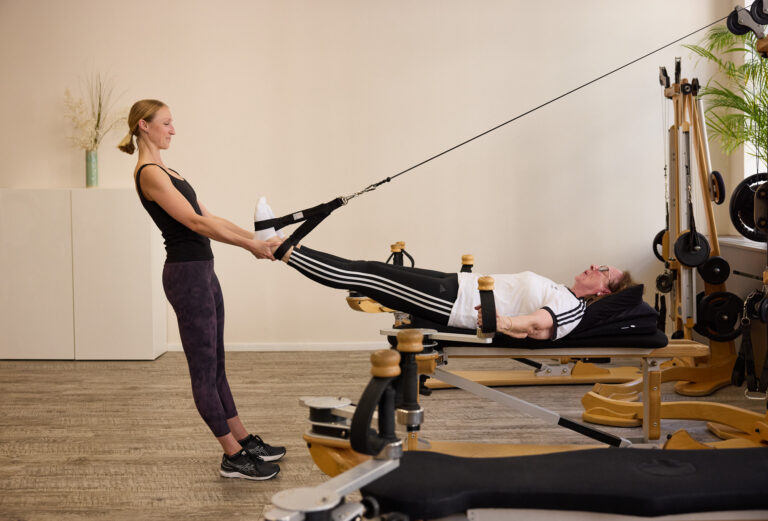
Training & Prevention – Building Up Actively
Core stability, movement quality, and load-bearing capacity are built up gradually—ensuring the back can handle the demands of everyday life in the long run.
How we treat herniated discs
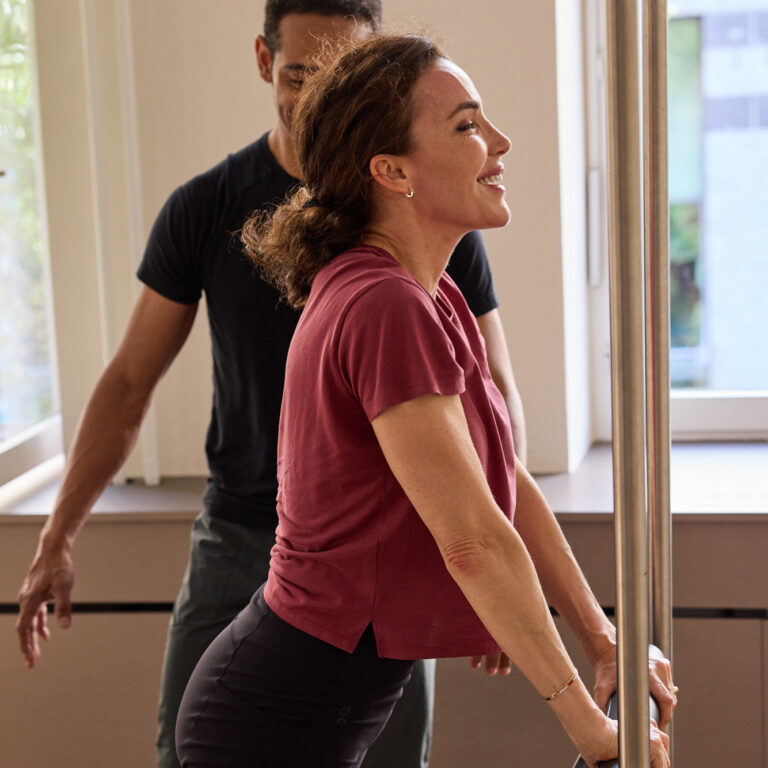
Appropriate services for a herniated disc
What you can do yourself
Complete rest is rarely the right answer for a herniated disc – but neither is carrying on without restraint. In most cases, gentle, decompressive movement is better than bed rest.
Watch out for warning signs: numbness, tingling, or a loss of strength in the leg or arm require medical evaluation – even if the pain is subsiding. We will tailor the movements and exercises suitable for your specific stage based on the clinical findings.

Did you know?
Health insurance subsidy available
Depending on the course format, certified prevention courses under Section 20 of the Social Code Book V (SGB V) may be eligible for subsidies from statutory health insurance funds. You can find details on our prevention courses page.
FAQ – Frequently asked questions about herniated discs
Didn't find what you were looking for? We would be happy to assist you personally.
What happens during a herniated disc?
The affected intervertebral disc shifts out of its normal position and can compress nerve structures, resulting in pain, numbness, or loss of strength. A precise classification is provided in the findings.
When is medical evaluation necessary?
If you experience numbness, tingling, or loss of strength in a leg or arm, bladder or bowel dysfunction, or severe pain following an accident, you should consult a doctor before starting physiotherapy.
Can a herniated disc heal without surgery?
In most cases, yes. The body is capable of partially resorbing disc tissue. Conservative treatment involving physiotherapy and targeted strengthening is the right approach for the majority of affected individuals.
Can I move around if I have a herniated disc?
In most cases, yes – provided it is dosed correctly and initiated properly. Targeted movement at the right time is a crucial part of recovery. We will determine the appropriate level of exertion during the initial appointment.
Can physiotherapy be prescribed for a herniated disc?
Physiotherapy can be prescribed by a doctor. If you have private health insurance, wish to pay for treatment yourself, or hold supplementary insurance for naturopathic treatments in addition to your statutory health insurance, we will discuss the options that are right for you in a transparent manner.
How does billing work in your private practice?
We bill via private health insurance, state aid schemes (Beihilfe), or as a self-pay service. Physiotherapy is billed according to the GebüH fee schedule, and naturopathic services according to the GebüH HP schedule. Please feel free to contact us if you have any questions regarding billing.
Contact & Appointment
If you would like to request an appointment, you've come to the right place. Simply fill out the form – we will get back to you.
Monday to Friday:
8:00 a.m. to 6:00 p.m.
(Appointments by arrangement)
Phone +49 (0) 69 92038093
Email: info@praxis-laemmerhirt.de